Electrochemistry
Electrochemical cells
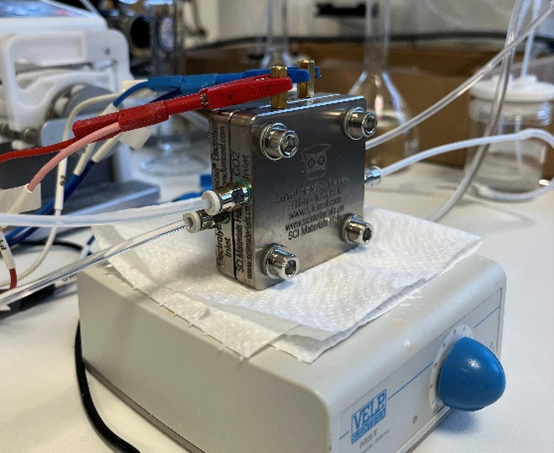
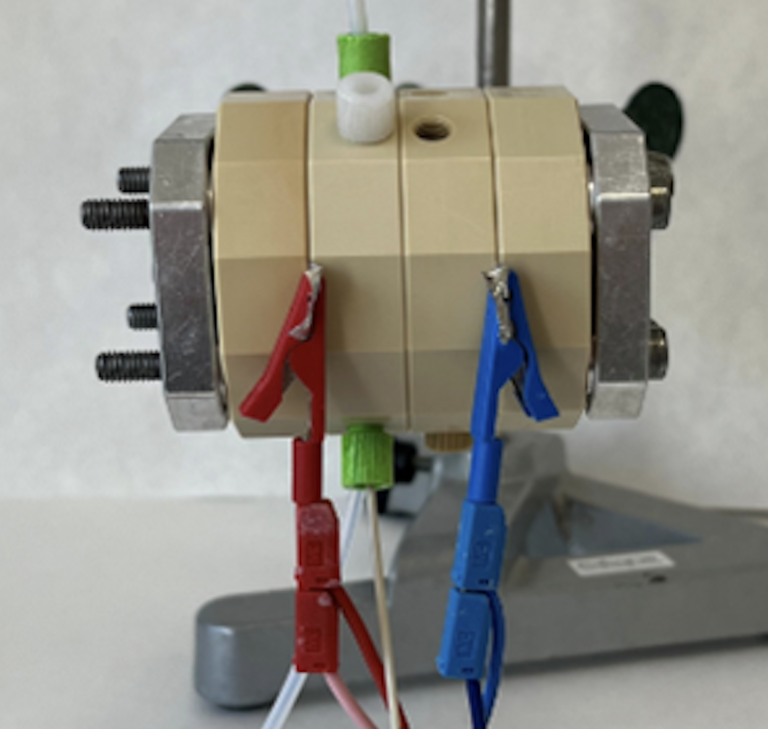
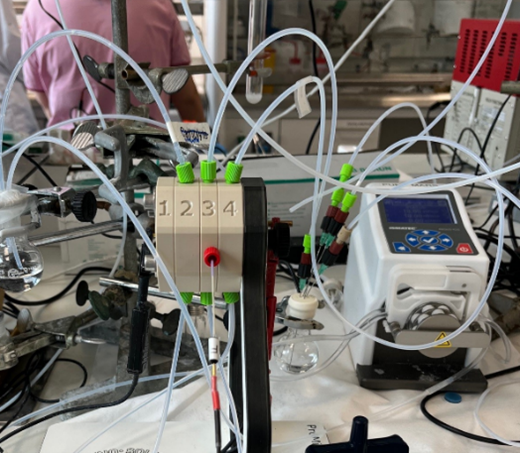
In our laboratories, we use a range of different electrolyzers to evaluate the performance of our catalysts. This includes H-cells, flow cells, and membrane-electrode assembly electrolyzers (MEAs), allowing for efficient evaluation of catalyst activity. These electrolyzers differ in their characteristics/properties and are compatible with different electrode substrates. The use of flow cells and MEAs allows us to operate at significantly higher current densities (several hundreds of mA) compared to those obtained in traditional H-cells.


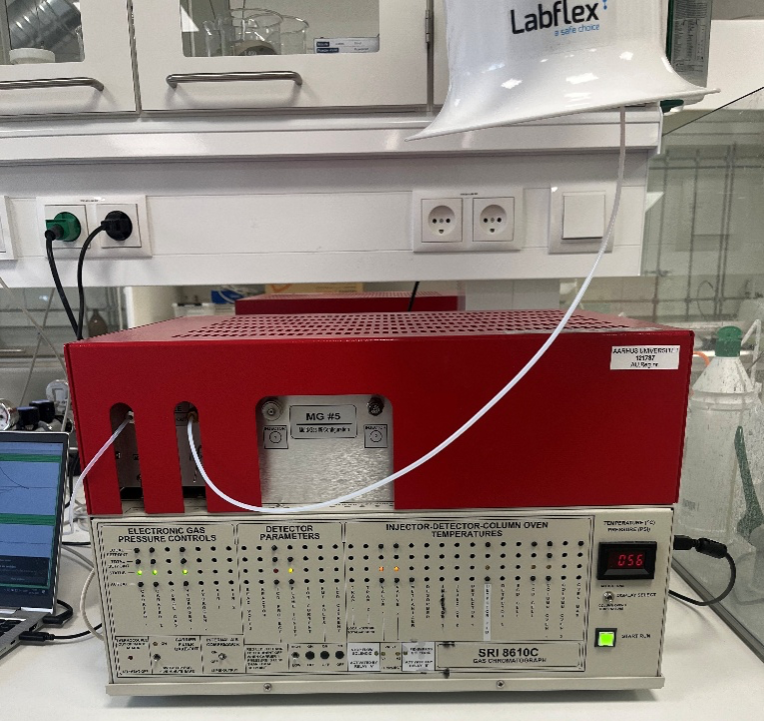
Online gas chromatographs (SRI Instruments, MG#5)
Gas products generated in bulk electrolysis experiments are quantified using online gas chromatographs (GCs) from SRI Instruments (MG#5). The GCs are operated in an automatic mode, injecting gaseous samples at specified time intervals. Gas products are separated based on their interaction with the column material inside the GC. Product detection is achieved using a flame-ionization detector and a thermal conductivity detector, allowing for ppm-level detection of reaction products.
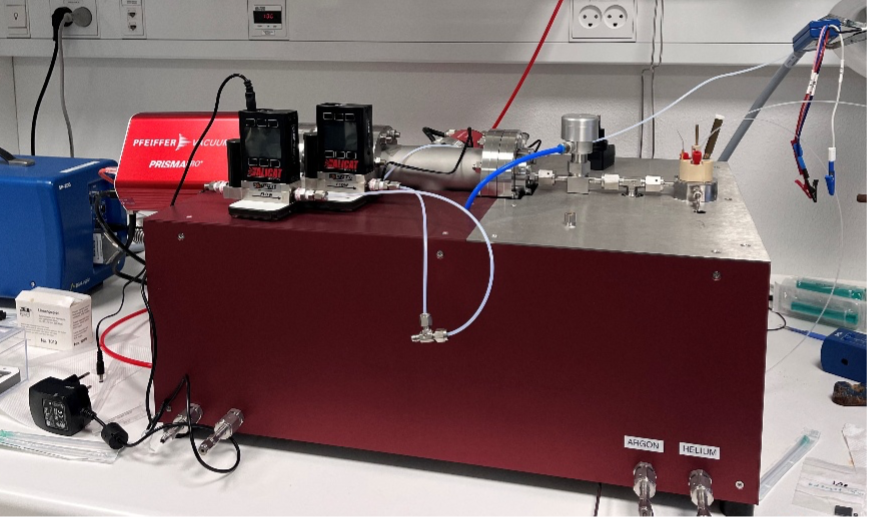
Electrochemical Mass Spectrometry (EC-MS, Spectro Inlets):
EC-MS is an analytical technique that couples an electrochemical cell with a mass spectrometer to monitor reaction products in real time. It enables sensitive detection of volatile and semi-volatile species formed during electrocatalytic processes, including transient intermediates that are otherwise difficult to resolve. This method is particularly useful for direct tracking of gaseous products under controlled electrochemical conditions.
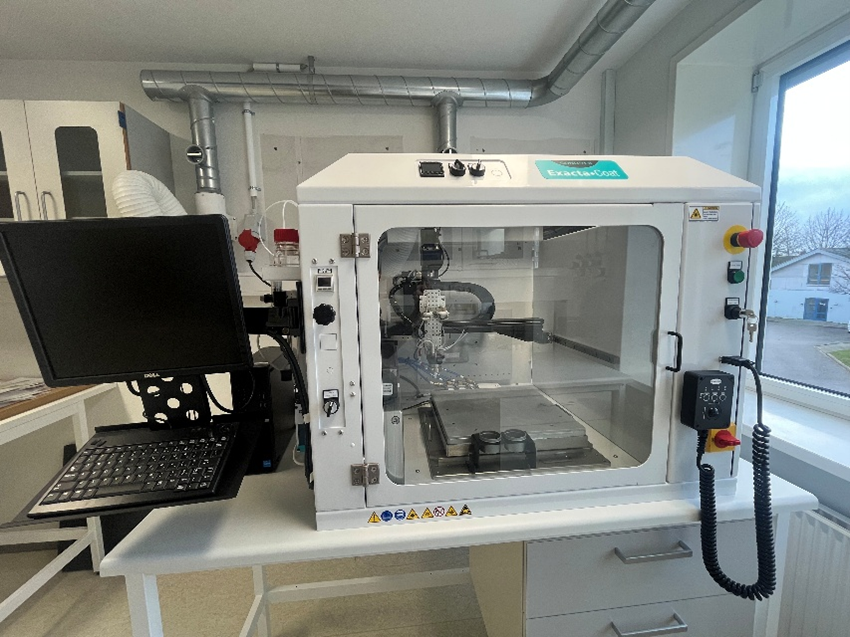
Spray coater (Sono-Tek ExactaCoat)
A spray coater instrument is available for electrode sample preparation. Using a robotic arm, electrodes may be spray-coated uniformly over large areas, allowing for deposition of catalysts or other surface layers. By controlling parameters such as sonication, flow rate, and temperature, electrode surfaces can be prepared reproducibly on a large scale.
Biologic potentiostats
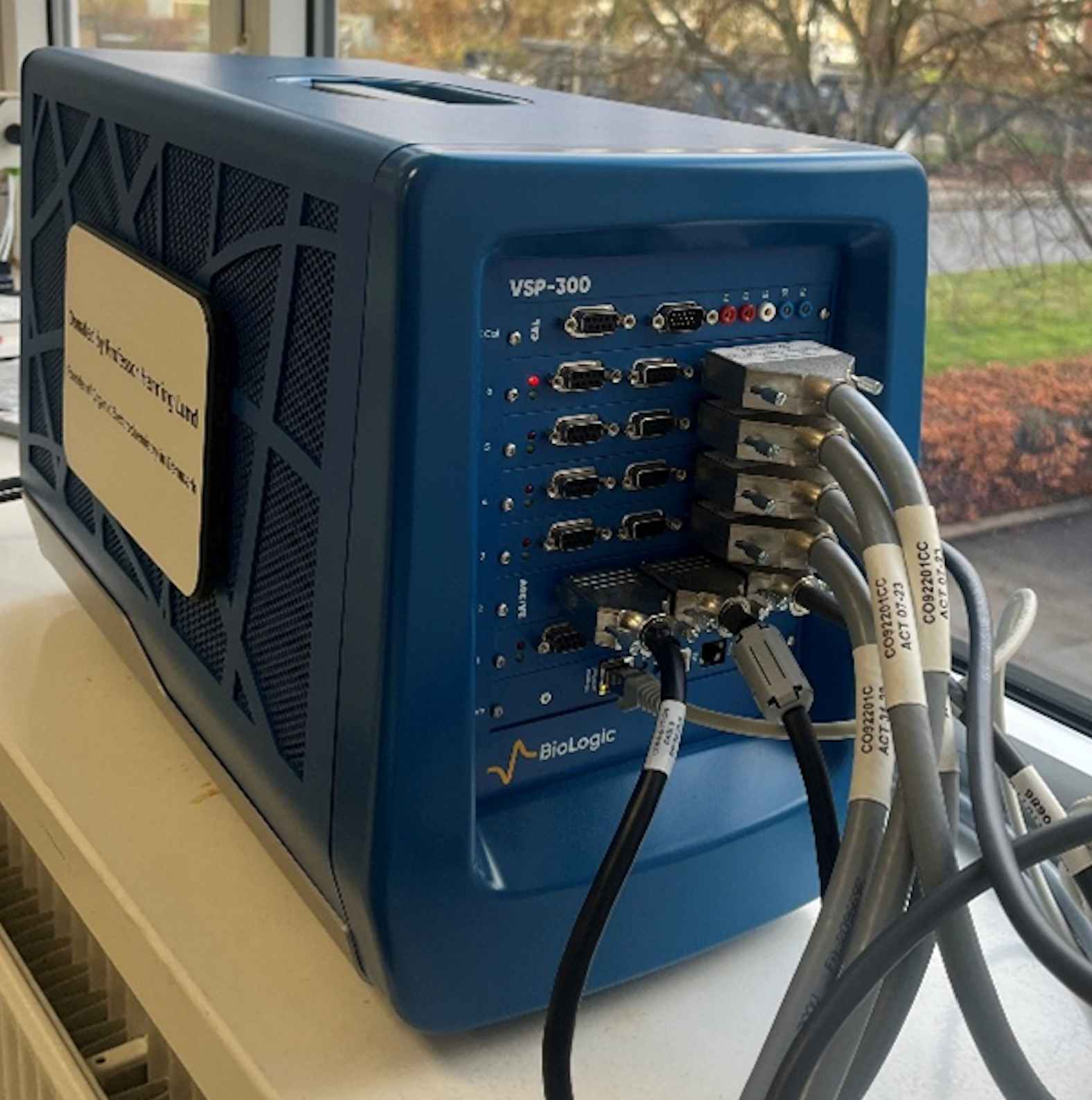
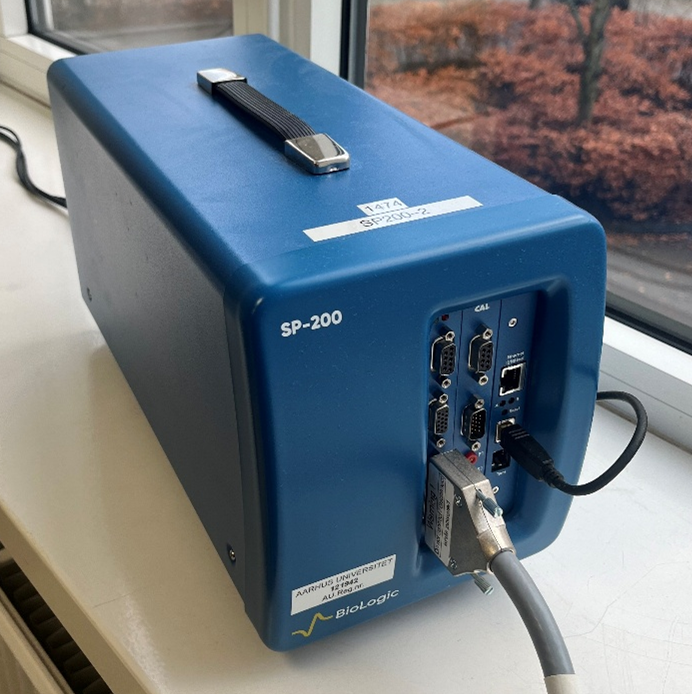
Our electrochemistry laboratories are equipped with four single-channel Biologic potentiostats (SP-200) as well as one multichannel Biologic potentiostat (VSP-300, 6 channels). These robust instruments allow for reliable data collection in a wide range of experiments, such as bulk electrolysis, cyclic/linear sweep voltammetry, chronopotentiometry, potentiostatic electrochemical impedance spectroscopy (PEIS), etc. The multichannel potentiostat enables us to run four independent experiments simultaneously. It is fitted with a booster channel, increasing the capacity of the instrument from 10 V to 30 V, and allowing for currents up to 2 A.

Contact
Daasbjerg Group
Novo Nordisk Foundation CO2 Research Center (CORC)
Aarhus University
Contact information for Prof. Kim Daasbjerg
Email: kdaa@chem.au.dk