CO₂ Electroconversion Research Presented at ISE 2026 in Sydney
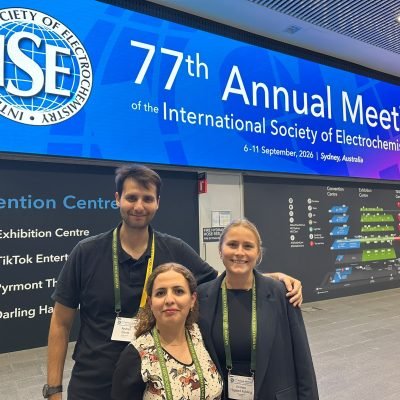
Members of our group participated in the 77th Annual Meeting of the International Society of Electrochemistry (ISE 2026) in Sydney, where they presented recent research on electrochemical CO₂ conversion and exchanged ideas with researchers from the international electrochemistry community.
Three researchers from the group presented their latest work:
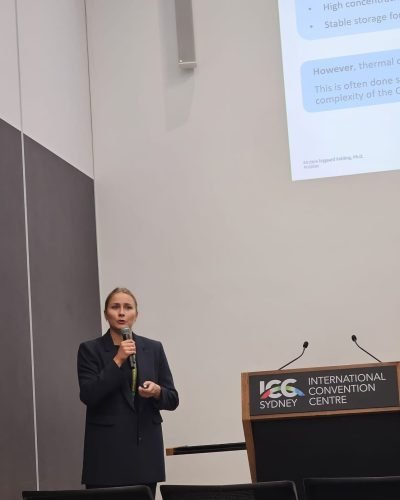
Kirstine Nygaard Kolding – Direct Bicarbonate Electroconversion for Integrated CO₂ Capture and Utilization
Kirstine presented strategies for enhancing in situ CO₂ availability from bicarbonate at the cathode surface to enable efficient syngas production. Her work combines TiO₂/ionomer-based interposer layers in membrane electrode assemblies to regulate local pH gradients with pulsed electrolysis to enhance CO₂ transport towards the cathode. Together with a Ni-based catalyst, these approaches enable highly selective bicarbonate-to-syngas conversion.
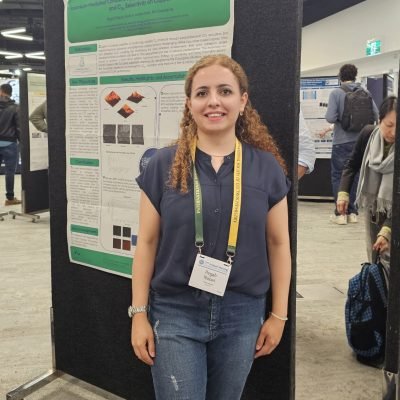
Pegah Nazari – Organic Surface Functionalization for Enhanced CO₂ Electroreduction
Pegah presented her research on iodonium-mediated covalent bipyridine coatings for copper electrodes. Her work investigates how organic surface functionalization can influence the catalytic interface, promote C–C coupling, and improve selectivity towards multicarbon products. Optimized surface coatings provide improved film adhesion while maintaining a favorable environment for CO₂ electroreduction.
Andrea Conte – Controlling CO₂ Electroreduction Selectivity through Magnetic Field Interactions
Andrea presented his research during Symposium 15 on the influence of external magnetic fields on CO₂ electroreduction. His work examines how magnetic fields affect reaction pathways, mass transport, and product selectivity, contributing to a better understanding of magnetically assisted electrocatalysis and its potential role in CO₂ conversion.
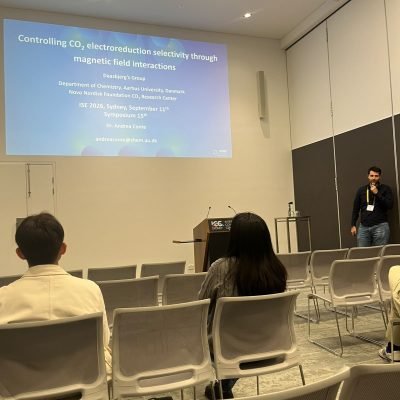
The conference provided an excellent opportunity to share our recent results, discuss emerging directions in CO₂ electroconversion, and connect with researchers from across the international electrochemistry community.
We thank the organizers of ISE 2026 and all participants for the stimulating discussions and scientific exchange.